
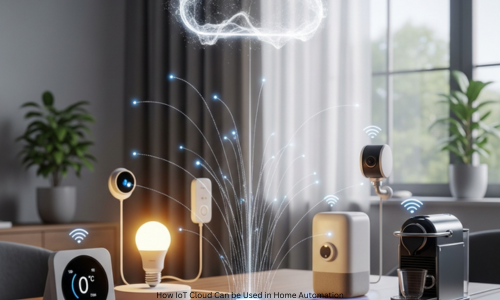
How IoT Cloud Can be Used in Home Automation? Imagine driving home after a long day. As you near, the house comes to life. The air conditioner sets your preferred temperature. The living room lights fade up to a warm glow. Your evening playlist starts playing softly. You walk in, and the house is already ready for you.
Is this magic? Science fiction? It’s real now. The devices matter, but an invisible engine makes it work: the IoT Cloud.
Many know smart speakers, lights, and thermostats. How do they work together? How can you control them from across the world? The IoT Cloud is the central system that links and runs your whole smart home. How IoT Cloud Can be Used in Home Automation?
What IoT and smart home control are?
- IoT means things like bulbs, coffee makers, locks, and cameras. These objects have sensors and software that send data over the internet. It gives everyday items a digital voice. How IoT Cloud Can be Used in Home Automation?
- Smart home control means using IoT inside your house. It automates lights, locks, thermostats, and appliances. The aim is more comfort, ease, safety, and energy savings.
If you have Philips Hue lights, a Nest thermostat, and a Ring doorbell, how do they talk? How do you control them from one phone app? The IoT Cloud does that work. How IoT Cloud Can be Used in Home Automation?
Core role of the IoT Cloud
Think of the cloud as the conductor of an orchestra. Each device plays its part, and the cloud cues them to act together.
- Centralized command and control Without the cloud, you’d need an app for each device brand. The cloud is a single hub where devices send their data. Your phone talks to the cloud, not each device. Tap “turn off all lights,” and the app sends one command to the cloud. The cloud then tells each light to switch off. How IoT Cloud Can be Used in Home Automation?
- Remote access from anywhere Worried you left the AC on or forgot to lock the door? A cloud-connected home lets you check and control things from anywhere. Your phone logs into the cloud, which connects to your devices at home. How IoT Cloud Can be Used in Home Automation?
- Data storage and processing Smart devices create lots of data on use and habits. The cloud stores that data and has the power to process it. Cloud processing turns raw data into useful tips, like ways to save energy. How IoT Cloud Can be Used in Home Automation?
- Automation and IF-THEN rules The cloud runs rules that automate tasks based on triggers. IF the door unlocks after ten p.m., it can send your phone a notice. IF motion appears in the hall at night, the light can come on dim. IF your phone nears home, geofencing can start the AC. You set the rules in the app, and the cloud watches triggers and runs actions.
- Making different brands work together Most homes have devices from many makers. The cloud acts as a translator so devices can work as one system. Platforms like Alexa, Google Assistant, HomeKit, and SmartThings use cloud services to link devices. Say “Movie Mode,” and the cloud can dim lights and turn on your TV and speakers. How IoT Cloud Can be Used in Home Automation?
- Updates, security, and upkeep Smart devices need software updates to fix bugs and close security holes. The maker sends updates to the cloud, which then updates devices over the internet. Updates often run at night to avoid interrupting use. This keeps your smart home secure, stable, and current. How IoT Cloud Can be Used in Home Automation?
The IoT Cloud makes separate smart devices feel like one smart home. It keeps them talking, learning, and acting for you.
A Day in a Cloud-Powered Smart Home
- 7:00 AM: The Wake Up routine runs in the cloud. It tells the blinds to open slowly, the lights to brighten like a sunrise, and the speaker to play a calm morning playlist. How IoT Cloud Can be Used in Home Automation?
- 8:30 AM: You leave for work. The cloud notices your phone left the home Wi-Fi or you press Away. It locks the doors, lowers the thermostat, and arms the security system.
- 1:00 PM: Your video doorbell spots motion and uploads the clip to its cloud. You get a phone alert and watch live from the office. Seeing a delivery, you speak through the app and ask them to leave the package by the door. How IoT Cloud Can be Used in Home Automation?
- 5:30 PM: The cloud sees you heading home via geofencing. It triggers the Welcome Home scene and starts the AC so the house is cool when you arrive.
- 11:00 PM: You say, Hey Alexa, goodnight. Alexa’s cloud handles the command and runs the Goodnight routine. Lights turn off, doors get checked, and the thermostat moves to your sleep setting. How IoT Cloud Can be Used in Home Automation?
Challenges and the Road Ahead
- Security and Privacy: Keeping all home data in the cloud raises real privacy and security risks. A cloud breach could expose sensitive data. Choose trusted makers that use strong encryption and clear security policies.
- Internet Dependency: Many features need a steady internet connection. If the internet fails, remote control and most cloud routines stop. Some systems now offer local control for basic functions to work without the internet. How IoT Cloud Can be Used in Home Automation?
- Smarter Homes: Using AI and ML in IoT clouds will make homes more predictive. Your home will learn habits and act before you ask. Imagine blinds lowering on a hot afternoon to save energy, or lights and music set to calm you after a rough day. How IoT Cloud Can be Used in Home Automation?
Conclusion: The Invisible Powerhouse
The IoT Cloud turns scattered smart devices into a unified smart home. It stores your settings, runs routines, and links you to your house from anywhere. When lights dim perfectly or your home welcomes you, the cloud is the quiet engine behind it. The smart home is here, and it runs on the cloud. How IoT Cloud Can be Used in Home Automation?
Frequently Asked Questions
What exactly is the IoT Cloud in simple terms?
The IoT Cloud is a set of internet servers your smart devices talk to. Companies like Amazon Web Services, Google Cloud, or device makers host these servers. The cloud stores data, runs routines, and lets you control devices from far away.
Do I really need an IoT Cloud for my smart home to work?
For most easy-to-use smart homes, yes. A single bulb might work on local Wi-Fi, but you lose key features without the cloud:
Remote control when away from home.
Complex routines linking multiple devices.
Voice assistants that need cloud services.
Easy device cooperation across brands. Without the cloud, devices act alone, not as a system.
Is my data safe? What are the security and privacy risks?
Risks are real but manageable. Reputable companies invest in cloud security and encryption. Users must also help protect their homes. Tips to stay safe:
Pick trusted brands with good security records.
Use strong, unique passwords.
Turn on two-factor authentication.
Keep device firmware up to date.
What happens if my internet connection goes out?
A cloud-dependent system loses many features. You will likely lose remote control and cloud-based routines. Voice assistants stop working. Basic functions often remain. A smart light switch can still work manually. Some systems run essential routines locally without internet.
Are there subscription fees for using the IoT Cloud?
It varies. Core platforms like Alexa, Google Home, and Apple HomeKit are usually free to use. Some devices offer paid plans for extra features, such as:
Cloud video storage for cameras.
Professional security monitoring. Most basic home automation features do not require a subscription.
Can I use devices from different brands together?
Yes. Major cloud platforms act as hubs that link different accounts and devices. You can control lights, plugs, and locks from one app and include them in the same routines. The new Matter standard will make cross-brand compatibility even easier.
What’s the difference between a cloud-based system and a local control system?
Cloud-Based: Easy setup, access from anywhere, and common for most users. It relies on remote servers. Local Control: Runs on a home hub. It keeps data inside the house, is faster, and works without internet. It needs more setup and tech skill, and remote access can be harder to configure.