
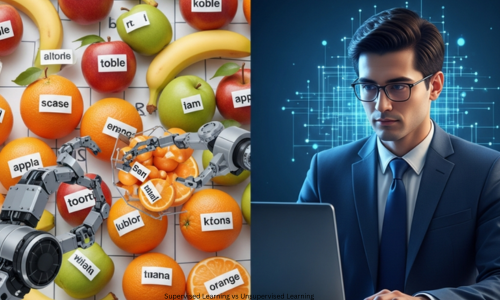
Supervised Learning vs Unsupervised Learning: A Complete Descriptive Guide. AI and machine learning fuel the tech boom today. Netflix uses them for custom suggestions. Banks spot fraud. Marketers group customers. At machine learning’s heart sit two key methods: supervised learning and unsupervised learning.
Grasp these methods if you work in tech. Students, researchers, data fans, or business teams all need this knowledge. Supervised and unsupervised learning each bring special skills. They vary by learning style, data type, uses, and strengths.
This blog post dives deep into both. We cover what they are and how they run. We look at algorithms, contrasts, real uses, pros, cons, and more. You’ll see which fits what task and why both matter in AI. Supervised Learning vs Unsupervised Learning: A Complete Descriptive Guide.
Introduction to Machine Learning
Machine learning sits inside AI. It lets machines learn from data. They skip hard-coded rules. Instead, they spot data patterns to predict, decide, or sort.
Learning styles differ. It hinges on data type. Labeled data with right answers calls for one method. Unlabeled data needs pattern hunts from scratch. Supervised Learning vs Unsupervised Learning: A Complete Descriptive Guide.
Here are the two big types:
- Supervised Learning
- Unsupervised Learning
They support machine learning in every field.
What Is Supervised Learning?
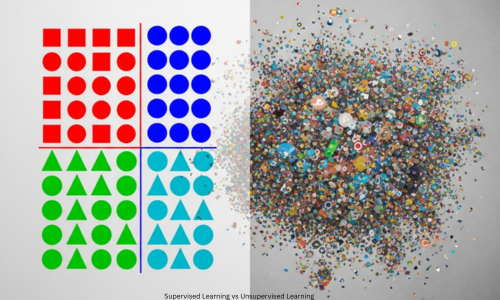
Supervised learning trains models on labeled data. Each example pairs input with the right output. The machine gets answers upfront.
Think of these:
- Emails tagged spam or clean.
- House data with sale prices.
- Photos marked cat, dog, or car.
The model links inputs to outputs. It then guesses outputs for fresh data. Supervised learning handles prediction, sorting, and input-output maps. Supervised Learning vs Unsupervised Learning: A Complete Descriptive Guide.
How Supervised Learning Works
The steps go like this:
1. Gather labeled data.
Inputs pair with output tags.
2. Split into train and test sets.
Train builds skills. Test measures them.
3. Train the model.
Algorithms link inputs to outputs.
4. Check performance.
Metrics like accuracy, precision, and recall show results. Supervised Learning vs Unsupervised Learning: A Complete Descriptive Guide.
5. Predict on new data.
The model tags fresh inputs.
Types of Supervised Learning
It splits into two main kinds:
1. Classification
Outputs are categories. Examples:
- Spam vs. no spam.
- Disease yes or no.
- Image type guesses.
2. Regression
Outputs are numbers. Examples:
- House prices.
- Stock values.
- Weather temps.
Common Supervised Learning Algorithms
Top picks include:
1. Linear Regression
Guesses numbers with straight-line fits.
2. Logistic Regression
Odds for class picks.
3. Decision Trees
Branching choices like a tree.
4. Random Forest
Tree teams boost right answers.
5. Support Vector Machine (SVM)
Best lines split classes.
6. k-Nearest Neighbors (KNN)
Votes from close matches. Supervised Learning vs Unsupervised Learning: A Complete Descriptive Guide.
7. Gradient Boosting
Weak models team up strong.
Applications of Supervised Learning
It pops up often. Key uses:
1. Email Spam Filters
Trained on tagged emails.
2. Face ID
Photos linked to names.
3. Medical Checks
Data tagged with illnesses.
4. Loan Risks
Repay odds from profiles.
5. Weather Predicts
Past data with results.
6. Ad Matches
User habits get classes.
It shines with lots of labeled data.
What Is Unsupervised Learning?
Unsupervised learning uses raw data. No right answers guide it. The model finds patterns and links on its own. Supervised Learning vs Unsupervised Learning: A Complete Descriptive Guide.
Examples:
- Shop groups by buy habits.
- Web traffic trends.
- Data clumps in big sets.
- It maps data, not labels.
How Unsupervised Learning Works
Steps differ here:
1. Collect raw data.
No tags or goals.
2. Run it through the model.
It hunts matches, odd spots.
3. Spot patterns.
Groups, shrinks, or links form. Supervised Learning vs Unsupervised Learning: A Complete Descriptive Guide.
4. Pull key facts.
Clusters, ties, or slim views emerge.
Types of Unsupervised Learning
Three core types:
1. Clustering
Similar items bunch up. Examples:
- Buyer groups.
- Doc stacks.
- Photo sorts.
2. Association
Links between items. Example:
Bread buyers grab butter.
3. Dimensionality Reduction
Trim features, keep essence. Example:
PCA shrinks data smart. Supervised Learning vs Unsupervised Learning: A Complete Descriptive Guide.
Common Unsupervised Learning Algorithms
Go-to tools:
1. K-Means Clustering
Splits into set groups by likeness.
2. Hierarchical Clustering
Builds cluster trees.
3. DBSCAN
Dense packs, outlier flags.
4. Apriori Algorithm
Rule and link finds.
5. PCA (Principal Component Analysis)
Cuts size, holds core traits. Supervised Learning vs Unsupervised Learning: A Complete Descriptive Guide.
Applications of Unsupervised Learning
Great for tag-free data. Top uses:
1. Buyer Groups
Behavior sorts for sales.
2. Oddball Spots
Fraud, flaws, weird acts.
3. Item Suggests
Like-products or users clump.
4. Search Matches
Same pics, clips, files.
5. Data Shrinks
Slim big sets key parts safe.
6. Link Hunts
Data ties you miss. It rules when labels lack. Supervised Learning vs Unsupervised Learning: A Complete Descriptive Guide.
Supervised vs Unsupervised Learning: Key Differences
See how they stack up.
1. Data Needs
Supervised: Labeled sets.
Unsupervised: Raw sets.
2. Aim
Supervised: Guess or sort knowns.
Unsupervised: Unearth hidden bits.
3. Results
Supervised: Clear targets.
Unsupervised: Fresh finds.
4. Ease
Supervised: Outputs guide clear views.
Unsupervised: Auto-links add puzzle.
5. Rightness
Supervised: Guidance yields high hits.
Unsupervised: Not as precise for forecasts, yet great for insights
6. Use Cases
Supervised: Spot spam, check risks, predict trends
Unsupervised: Group customers, find oddities, probe data
7. Dependency on Data
Supervised: Needs top-notch labeled data
Unsupervised: Relies on data patterns, skips labels
Real-Life Examples: Supervised vs. Unsupervised Learning
These examples show the differences in action. Supervised Learning vs Unsupervised Learning: A Complete Descriptive Guide.
Supervised Learning Examples
- Google Photos spots faces in photos
- Netflix guesses your next watch
- Hospitals spot diseases in images
- Banks approve or deny loans
Unsupervised Learning Examples
- Facebook links like-minded friends
- Amazon groups items for “others bought too”
- Spotify sorts tracks by sound traits
- Firms build buyer profiles on their own
Advantages of Supervised Learning
- Delivers spot-on predictions
- Handles sorting and number guesses well
- Fits tasks with known results
- Generalizes with plenty of labeled info
- Perfect for forecasts in business
Disadvantages of Supervised Learning
- Demands big sets of labeled data
- Labeling costs time and money
- Misses hidden links sans labels
- Overfits without enough data
Advantages of Unsupervised Learning
- Runs fine without labels
- Uncovers fresh patterns
- Aids in scanning data
- Cuts down data size
- Tackles big, tricky datasets
Disadvantages of Unsupervised Learning
- Outcomes can confuse
- No true benchmark for checks
- Tough to gauge precision
- Groups might not fit real life
- Needs expert know-how to grasp
When Should You Use Supervised Learning?
Pick supervised when:
- Labels are on hand
- Future guesses matter
- Accuracy counts most
- Task is sorting or number-based
Common fields:
- Finance
- Healthcare
- Marketing
- Security
- Weather prediction
When Should You Use Unsupervised Learning?
Pick unsupervised when:
- Data lacks labels
- Pattern hunts appeal
- Customer groups are key
- Oddities need spotting
Common fields:
- E-commerce
- Retail
- Cybersecurity
- Research
- Manufacturing
Combining Supervised and Unsupervised Learning
Top AI setups blend both methods. Supervised Learning vs Unsupervised Learning: A Complete Descriptive Guide.
Examples:
- Semi-supervised (some labels, some not)
- Unsupervised prep then supervised tweak
- Cluster first, then sort with supervision
This mix boosts precision, cuts label needs.
The Future of Supervised and Unsupervised Learning
Machine learning grows fast. Both types stay central.
Trends ahead:
- Smarter neural nets
- Self-supervised (self-made labels)
- AutoML for ease
- Hybrid and semi setups
- Better clustering tools
- Tools for clearer results
AI will mimic human learning mix of labels and pattern finds. Supervised Learning vs Unsupervised Learning: A Complete Descriptive Guide.
Conclusion
Supervised and unsupervised form machine learning’s base. They vary in data use, aims, methods, and jobs. Supervised excels with labels for exact guesses. Unsupervised shines at finding links and data shapes. Supervised Learning vs Unsupervised Learning: A Complete Descriptive Guide.
Paired, they drive tech wins in health, finance, fun, and shops. Know their strengths, gaps, and fits to pick best for your work, studies, or aims. Supervised Learning vs Unsupervised Learning: A Complete Descriptive Guide.
FAQs
Q1. In machine learning, what is supervised learning?
Supervised learning is the process of learning from the labeled data. Every input is paired with known output values.
Q2. What is unsupervised learning in machine learning?
Unsupervised learning uses unlabeled data. Models find patterns and links on their own.
Q3. Which type of learning is more accurate?
Supervised learning predicts better. It trains on correct outputs. Unsupervised seeks patterns.
Q4. What are examples of supervised learning applications?
Spam filters, disease checks, credit scores, face ID, and sales predictions count as examples.
Q5. What are examples of unsupervised learning applications?
Customer groups, oddity spotting, suggest engines, doc clusters, and buy pattern checks work well.
Q6. What types of problems does supervised learning solve?
It handles classification and regression. Both need set outcomes.
Q7. What types of problems does unsupervised learning solve?
It fits clustering, rule finding, and size cutting tasks.
Q8. Is labeled data necessary for supervised learning?
Yes. Labels teach input-output links.
Q9. Which learning type is better for prediction tasks?
Supervised excels. It draws from past labeled results.
Q10. What are the advantages of supervised learning?
It gives high accuracy, easy checks, and solid predictions with labels.
Q11. What are the limitations of supervised learning?
It needs big labeled sets. Those cost time, money, and risk bias.
Q12. Which learning type is better for beginners?
Supervised suits new folks. Outcomes measure clear and simple.