
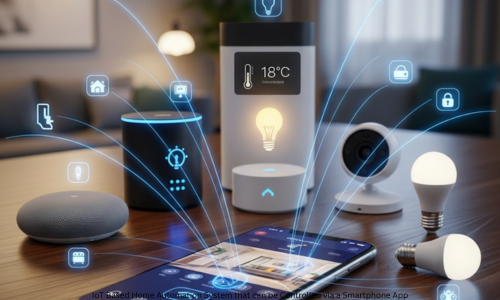
IoT Based Home Automation System that can be Controlled via a Smartphone App. Just imagine instantly turning on your lights, fans, or door locks with a single tap of your phone. The concept just came alive with what is called the Internet of Things. IoT home systems transform normal homes into smart homes that perform tasks with efficiency.
Understanding IoT in Home Automation
IoT connects typical devices such as lights, thermostats, and cameras to the internet. These devices collect and share information. In turn, you can remotely control and manage these devices through applications or even voice commands. IoT Based Home Automation System that can be Controlled via a Smartphone App.
Why Use a Smartphone for Home Automation?
Phones serve as perfect controllers for smart settings. You can check, run, and set devices remotely.
- Convenience: Access all the tools directly from your screen.
- Real-time Control: Receive notifications instantly and act upon them at any moment.
- User Interface: New applications clearly show panels for easy usage.
Components of IoT-Based Home Automation
- Sensors: monitor in-room variables like air or light.
- Microcontrollers: These are the base thinkers and can be an Arduino, ESP8266, or Raspberry Pi.
- Communication Modules: Link gadgets without wires.
- Smartphone App: Allows individuals to issue and receive orders. IoT Based Home Automation System that can be Controlled via a Smartphone App
Working Principle of IoT Home Automation
The setup runs on a basic flow:
- Sensors capture information.
- Data goes to the microcontroller.
- It checks the information and links on-line.
- People place orders using a phone app.
- The setup does the necessary steps. IoT Based Home Automation System that can be Controlled via a Smartphone App
Smartphone Application Interface
A good phone application should include:
- Gadget states live updates
- Toggles to switch devices on or off
- Timer and auto task tools
- Alerts for issues like break-ins
Apps such as Blynk and Smart Life help tie IoT parts to your phone. IoT Based Home Automation System that can be Controlled via a Smartphone App.
Popular IoT Platforms for Home Automation
- Blynk: Easy start in building your phone tools.
- Google Home: Works with devices for voice guides.
- Amazon Alexa: Sets up tasks with voice cues.
- Apple HomeKit: Fits best with Apple devices.
Key Features of IoT-Based Home Automation Systems
- Remote Control: Run home tools from any spot.
- Energy Efficiency: Watch and cut power use smartly.
- Security Alerts: Identify unusual events with prompt notifications. IoT Based Home Automation System that can be Controlled via a Smartphone App
- Automation: Plan daily habits to run alone.
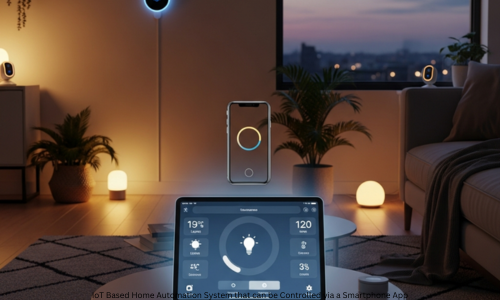
Advantages of IoT-Based Home Automation
- Comfort and Convenience: Easy operation enhances everyday convenience.
- Energy Efficiency: Efficient handling of power minimizes bills.
- Safety: Quick notices guard your space.
- Accessibility: This helps a lot with older or less mobile people.
Challenges in IoT-Based Home Automation
Perks it may have, but issues exist:
- Security risks: Poor web guards can invite breaks.
- High Setup Cost: High-end systems are very expensive initially.
- Internet Dependency: Requires a stable connection to operate effectively.
Applications of IoT Home Automation
- Smart lighting: Adjust light intensity and colors externally.
- Smart security: Control cameras, locks and alarms.
- Smart appliances: Set the washing machine, fridge and oven to run automatically. IoT Based Home Automation System that can be Controlled via a Smartphone App
- Environmental monitoring: Monitor heat, humidity and wind.
How to build a simple IoT home automation system
- Hardware requirements
- ESP8266 microcontroller
- Relay module
- Heat and motion sensors
- Phone with Blynk app
- Software Installation
- Load Arduino IDE
- Add the control code
- Wire the parts together
- Connect your Blynk app with a key code
- Control your gadgets from your phone right away!
Future of IoT in Home Automation
The path ahead seems sharper and greener. AI will let homes guess what you want, such as lights on when you pull up or heat set just so. IoT will drive the energy use down, making green homes the norm. IoT Based Home Automation System that can be Controlled via a Smartphone App.
Security and Privacy Considerations
- Use Encrypted Networks: Lock the data paths tight.
- Strong Authentication: Protect with passcodes or fingerprint scans.
- Regular Updates: Update software and applications regularly.
These moves keep your smart setup handy and safe.
Conclusion
IoT home systems revolutionize the way we live. They merge technology with convenience, making life safe, smart, and smooth. Control with a phone-a clear manifestation of new development-puts the full power of your house in your palm. IoT Based Home Automation System that can be Controlled via a Smartphone App.
FAQs
Q1: What is IoT-based home automation?
A configuration that would connect home devices to the internet for control either by phone or voice.
Q2: Can I control my home without Wi-Fi?
Most require the internet, although some allow for offline basic Bluetooth use.
Q3: Is IoT home automation expensive?
Simple ones cost little, but full ones with AI add up.
Q4: Are IoT-based systems secure?
Yes, with locked links and firm passcodes.
Q5: Can I create an IoT home automation project myself?
Sure, use Arduino or ESP8266 plus Blynk and make one in no time.
1 thought on “IoT Based Home Automation System that can be Controlled via a Smartphone App”