
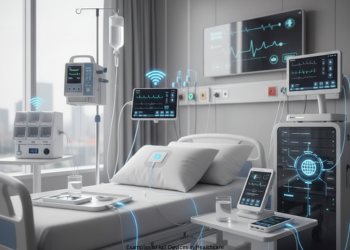
Examples of IoT Devices in Healthcare. Picture your doctor spotting a heart problem before any signs hit you. See smart tools cut fall risks for your aging parent. Watch a diabetic kid’s blood sugar stay steady, no endless finger sticks needed. This world exists now. The Internet of Things (IoT) builds it. Health care stayed mostly reactive for years. Symptoms show up. Then you see a doctor for checks and fixes. IoT changes that. It brings steady, custom care. Medical devices, sensors, and doctors link up via the cloud. That’s the Internet of Medical Things (IoMT). These tools go beyond toys. They save lives and change them. Let’s look at seven key IoT devices in health care. See how they help patients and doctors.
1. Wearable Fitness and Health Trackers (The Gateway Device)
What It Is: Most people know these best. Think Apple Watch, Fitbit, or Oura Ring. They do more than count steps.
How IoT Works: Sensors track heart rate, blood oxygen (SpO2), sleep, temperature, even ECG. Data flows to your phone app and cloud. Apps show patterns. Some warn of odd heart rates or atrial fibrillation (AFib).
The Impact: Not for full diagnoses. Still, they help you own your health. Share long-term data with doctors. It beats one quick clinic check. Examples of IoT Devices in Healthcare.
2. Continuous Glucose Monitoring (CGM) Systems
What It Is: Huge help for diabetes. A tiny skin sensor (arm or belly) checks sugar levels around the clock.
How IoT Works: It reads sugar in body fluids. Bluetooth sends data to a phone app or reader every few minutes. Alarms sound for low (hypoglycemia) or high (hyperglycemia) sugar. Share live data with parents via cloud.
The Impact: No more prick tests often. See how food, workouts, stress hit sugar. Control diabetes better. Cut risks of bad events. Examples of IoT Devices in Healthcare.
3. Smart Inhalers for Asthma and COPD
What It Is: Asthma and COPD need steady care. Smart sensors clip on regular inhalers to log use.
How IoT Works: It notes date, time, place of each puff. Data hits your phone app. App reminds you to dose. Tracks triggers like pollen. Makes doctor reports.
The Impact: Sticking to meds proves tough. These give real use data. Doctors see if plans work or if disease worsens. Or if you skip doses. Examples of IoT Devices in Healthcare.
4. Remote Patient Monitoring (RPM) Devices
What It Is: Key IoMT group. Track folks at home, not just clinics. Use linked blood pressure cuffs, scales, oxygen readers, heart monitors.
How IoT Works: After hospital or for ongoing issues, take devices home. Data goes to safe cloud. Nurses or doctors watch. Bad readings trigger alerts. They call, tweak meds, or send you to ER.
The Impact: Cuts hospital returns. Saves money. Lets recovery at home. Great for heart failure, high blood pressure, after surgery. Examples of IoT Devices in Healthcare.
5. Ingestible Sensors (“Smart Pills”)
What It Is: Like sci-fi turned fact. Swallow a pill with a sand-grain sensor. First one tracks if you take meds.
How IoT Works: Pill hits stomach. Fluids wake sensor. It signals a skin patch. Patch sends time and proof to app and doctor.
The Impact: Skipping meds costs billions, hurts results. Sensors prove you took it. Key for mental health or transplant drugs. Examples of IoT Devices in Healthcare.
6. Smart Hospital Beds
What It Is: Beds now think. Sensors watch if patient is there, weight, moves.
How IoT Works: Spots exit tries for fall risks. Alerts nurses. Shifts pressure against sores. Weighs without lift. Tracks vitals. All feeds hospital system.
The Impact: Stops falls. Boosts comfort. Frees nurses from checks. Gives live alerts. Examples of IoT Devices in Healthcare.
7. Connected Medication Dispensers
What It Is: Helps elders or busy schedules. Loads pills for days or weeks.
How IoT Works: Time hits. Lights flash, beeps, drops right dose. No take? Texts or calls kin or aide.
The Impact: Ups med sticking. Cuts misses or extras. Eases family worry. Examples of IoT Devices in Healthcare.
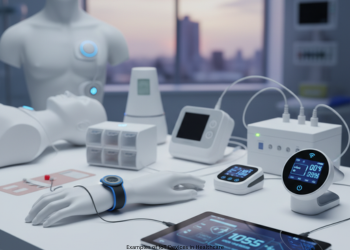
8. Fall Detection Devices for the Elderly
What It Is: Modern fall detection devices do more than act as panic buttons. They rely on accelerometers and gyroscopes to spot hard falls on their own.
How IoT Works: People wear these as pendants or wristbands. The tools tell daily moves from true falls. After a fall, if the user stays down too long, it dials set contacts or monitoring help. Smartwatch types now add cell service and GPS for calls from any spot.
The Impact: Fast aid after falls aids seniors’ recovery. These devices build a key safety layer for lives with more freedom. Examples of IoT Devices in Healthcare.
9. Connected Contact Lenses
What It Is: Smart contact lenses sit in early lab stages. They track health signs with built-in electronics.
How IoT Works: Google built a test lens to check sugar in tears for those with diabetes. It held a small chip and sensor. Data flowed to paired devices. Tests now cover eye pressure checks for glaucoma care.
The Impact: Wide use waits ahead, yet promise grows large. They bring top non-cut monitoring that fits right into daily routines. Examples of IoT Devices in Healthcare.
10. Connected Thermometers
What It Is: Smart thermometers log body heat readings with ease.
How IoT Works: A reading sends via Bluetooth to a phone app at once. Apps chart fever paths over days for whole families. In the COVID era, blended data from many units let experts watch flu signs spread live by region. This served as an early alert tool.
The Impact: Users gain simple illness tracking. Public health taps rich live data on disease patterns. Examples of IoT Devices in Healthcare.
The Future is Connected
These ten cases mark the start. Medical IoT joins devices with data, patients, and doctors in one care web. It turns spot health checks into full-time clear views. Such power raises key issues. Data guards, privacy rules like HIPAA, and data loads top the list. Clear fixes pave paths to health care that forecasts, tailors to each, and draws all in. Examples of IoT Devices in Healthcare.
Frequently Asked Questions (FAQ) on IoT in Healthcare
Is data from my health IoT device safe? How about privacy?
Health tech faces this top worry. Laws like HIPAA in the US guard your health data privacy and security.
Trusted IoMT firms follow HIPAA. They must use strong safeguards, such as:
Data Encryption: Data gets scrambled in transit from device to cloud. It stays scrambled on servers. Access Controls: Just approved staff, like doctors or nurses, view your personal health info. Secure Cloud Setup: Firms pick safe clouds like AWS, Google Cloud, or Az. Examples of IoT Devices in Healthcare.
Do consumer wearables like Apple Watch or Fitbit work well for medical needs?
Know the key split. Most wearables count as wellness tools, not medical ones. They track patterns, build good habits, and give health snapshots.
But they lack FDA approval for sole diagnosis. Take Apple Watch: it spots AFib signs and warns you. Still, see a doctor for a true EKG check.
Key point: Wellness tools inform and motivate. For serious issues, use doctor-approved medical gear.
What if internet fails? Does the device quit?
It varies by device and task.
Data Logging: Tools like CGMs or smart inhalers store data on board. They keep going offline. Data syncs to cloud once online. Real-time Alerts: Weak spot hits alert-based devices. A remote monitor needs net for high blood pressure warnings to staff. Fall pendants need cell or net to call aid. Many alert systems now add 4G/5G backup. This cuts reliance on home Wi-Fi. Examples of IoT Devices in Healthcare.
Who covers costs for IoT health devices? Does insurance help?
Coverage grows, often yes for medical ones.
Wellness Gear (Fitbit, etc.): Buyers pay cash. Medical Tools (CGMs, RPM): Insurance pays more when doctors order them for long-term care. CGMs get coverage from many plans and US Medicare for those who qualify. RPM cuts hospital returns, so insurers reimburse. Ask your insurer what your plan covers.
Does nonstop monitoring raise patient stress?
Yes, “data anxiety” is real. Some fixate on small data shifts and feel more worry.
Providers know this. Good IoMT setups fight it with:
Smart Alerts: Notices fire only at real problem levels. Normal ups and downs get ignored. Trend Focus: Doctors teach long-term views over weeks, not one odd reading. Context Help: Apps give info to explain data in full picture. For most, monitoring brings calm that beats worry risks. Examples of IoT Devices in Healthcare.
How do IoT, IoMT, and Telehealth differ?
They link but stand apart.
IoT: Wide idea of net-linked objects. Think fridges, lights, cars. IoMT: IoT branch for health gear, sensors, systems. CGMs fit here. Telehealth: Remote care methods. Covers video visits, talks, and RPM. Examples of IoT Devices in Healthcare.
1 thought on “Examples of IoT Devices in Healthcare”