
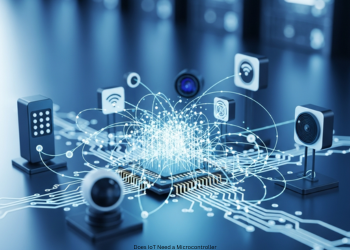
Does IoT Need a Microcontroller? Our world is getting smarter day by day. Homes run on smart thermostats, cities glow with smart streetlights, and factories hum via smart sensors. This huge web of linked devices makes the Internet of Things, or IoT. It all gives top efficiency, ease, and clear views. IoT often means phone apps with temps, factory stats, or package alerts. We see the flow of data and movement. But there is still one major question that hits the “things”: What gives them their intelligence? How do simple entities sense around themselves, compute data, and connect to the digital world?
Does IoT demand a microcontroller?
Yes, in about every instance. But that yes holds a very rich story. The microcontroller acts like the silent champion for IoT. It bridges the gap from physical things of this world to digital space. To grasp it, let’s unpack what an IoT device does. See the microcontroller’s must-have part in each step. Does IoT Need a Microcontroller?
Part 1: Key Parts Defined – IoT vs. Microcontroller
First, nail down each term sharp.
What is the Internet of Things (IoT)?
IoT is a complete ecosystem. It interconnects the physical devices or “things” embedded with sensors, code, and technology. They connect with the internet and share data with others. Imagine IoT as the main nerve fabric for infinite digital locations.
What is a Microcontroller (MCU)?
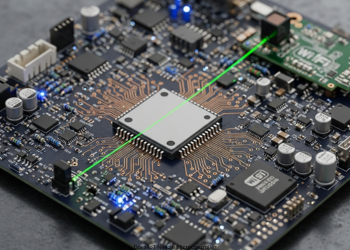
A microcontroller means one small, full computer on a lone chip. It packs in a processor, RAM memory, and Flash storage together. No match for a laptop’s power. It stays low-energy, built for one set job on repeat. IoT as nerve web? The microcontroller turns into each “thing’s” local brain or nerve hub. Does IoT Need a Microcontroller?
Part 2: Four Core Tasks of a Microcontroller in IoT Gear
An IoT device outclasses the single sensor with Wi-Fi. It executes a chain of actions. The microcontroller is leading, executing, and pulling the load. See its four major roles. Does IoT Need a Microcontroller?
Job #1: Sensor Reader (Grab Data)
“T” in IoT flags “Things.” They track their spot via sensors for heat, light, moves, damp, push, or spot. Sensors spit raw electric blips. Think analog volts or digital beats. Useless alone.
Microcontroller’s job: that is, translator. Picks up signals through input pins, as with an ADC. Code converts the raw feed to readable digital facts. For example, the volt off of a heat sensor becomes “23.5 degrees C.” No MCU? Sensor noise remains junk. Does IoT Need a Microcontroller?
Job #2 On-Site Judge (Crunch Data)
Not all data rushes online. That drains power and lines. Often, the gear picks fast on its own.
Microcontroller Job: MCU fires key code; it executes rules like “If heat tops 30°C, then act.” Basic edge work. No cloud wait.
Local crunch gives:
- Quick Reactions: Smoke gear blasts alarm right off, skips web loop.
- Low Send Fees: Code flags big shifts only, skips dull streams.
- No-Web Work: Link drops? MCU code keeps core jobs alive.
Job #3: Action Boss (Real-World Moves)
Many IoT devices sense and actuate. They turn things on and off, move pieces, display information. It’s all accomplished by actuators: motors, relays, LEDs, buzzers, displays. Job of the Microcontroller: MCU calls the shots. Its code or a web order from it fires the exact signals through its output pins. High pulse flips a light relay, pulse trains spin a motor, bits feed an LCD for text. MCU shifts the code plans to true acts. Does IoT Need a Microcontroller?
Job #4: Link Boss – Handle Ties
Now comes the web side of IoT. Data is sitting gathered, crunched; it’s time to ship. A comm chip does it, be it Wi-Fi or Bluetooth. Does IoT Need a Microcontroller?
A microcontroller controls the whole process:
- Shapes Data : Wraps facts such as “23.5°C” in JSON or MQTT format.
- Runs Links: Sets Wi-Fi chip to join net with right passcode.
- Guards Safe: Locks data with code pre-send to block snoops.
- Cloud Talks: Ships to set servers or platforms. Hears back orders, like app note to light up.
Part 3: Any Skips or Swaps?
Always a microcontroller? Well, close, but sometimes brains change form.
Exchange 1: Microprocessor Configurations (such as Raspberry Pi)
A microprocessor, or MPU, in Pi boards, or laptops, bypass MCU style. For MPU it means core processor alone. Needs outside RAM, store, inputs. Far more punch, full OS like Linux, big power draw. Does IoT Need a Microcontroller?
Choose MPU for IoT when: “Thing” gets real tough. Like:
- Cam gear with heavy sight code on site.
- Home base hub bossing scores of plain IoT bits.
- Gear that runs its own site server.
MPU still nails the four jobs-sense, crunch, act, link-just way bigger. Core need for a brain stays firm.
Exchanging 2: Bare-Bones “Beacon” Tags
How about a Bluetooth tag that beams its ID? Super plain. Full IoT stays half-done till caught and crunched. Phone steps up as power brain. Its chip spots tag, names it, webs the spot info. Tag has base chip, true. Smarts to join “Things” web shift to near strong gear. Processor need lives on, just elsewhere. Does IoT Need a Microcontroller?
Conclusion: The Necessary Brain of the “Thing”
Does the IoT need a microcontroller? Yes, most definitely. A genuine IoT device cannot be an inanimate, passive thing. It has to be smart enough to sense its environment. It has to decide on actions to perform, execute them, and connect to the world. The microcontroller supplies that smarts. It acts as the inexpensive, low-power, flexible brain for these jobs. Skip it, and a smart thermostat becomes plain a thermometer. A smart lock turns into mere metal. A fitness tracker is only a wristband. The microcontroller works quietly behind the scenes. It imbues life into the “things.” They shift from inanimate items to spry, helpful players in our wired world. Does IoT Need a Microcontroller?
FAQs
Q1: Does an IoT device really need a microcontroller?
Yes, in most cases. The microcontroller acts as the brain of the device. It conducts simple functions. Without it, the device is merely loose and useless parts.
Q2: What does the microcontroller do in an IoT device?
It performs four major functions:
It senses data from sensors, such as heat or movement. Processing: It executes main logic and performs rapid decisions. Acting: It executes elements such as lights, motors, and displays. Communicating: It connects to the Internet, transmits data, and receives instructions. Does IoT Need a Microcontroller?
Q3: How is a microcontroller different from the Internet of Things?
A microcontroller is a small chip that works like a mini computer; IoT is an idea or network of linked devices. The microcontroller makes a device smart for IoT.
Q4: Can you hook a sensor straight to the internet?
No, sensors produce raw signals. Then, a microcontroller reads them. It converts signals to data like “25°C.” Further on, it configures Wi-Fi and sends the data to a server. Does IoT Need a Microcontroller?
Q5: What about a Raspberry Pi? Is it a microcontroller?
No. A Raspberry Pi is a stronger single-board computer. It runs full systems like Linux. Use it for tough IoT jobs like video or as a hub. It plays the brain role, but it’s not a true microcontroller.
Q6: Do any IoT devices skip the processor, such as a microcontroller?
Simple devices, such as a basic Bluetooth beacon, may not be that powerful. That is where your phone enters as the brain. It receives the signal, processes it, and connects online. There is still a processor; it is just elsewhere. Does IoT Need a Microcontroller?
1 thought on “Does IoT Need a Microcontroller?”