

Best Microcontrollers for IoT Beginners in 2026. You have an idea. A smart one. Build a weather station that texts rain alerts. Or a plant waterer you check by phone for soil moisture. Or a light that shifts colors with your team’s score. IoT makes this real. Everyday items link up, gain smarts, and help out. But how to turn ideas into working gear? How to add brains and internet links to plain objects? One small chip does it. Powerful, and easy to grasp is the microcontroller: It’s a full tiny computer on this chip. It brains your build. New to IoT? Choices like ESP32, Arduino, Pico, STM32, Particle flood in. It feels like a huge library sans guide. Overload hits fast. Relax, this post plays guide. We skip the mess and we spotlight key beginner facts. We pick top chips to kick off your IoT fun. Best Microcontrollers for IoT Beginners in 2026.
Part 1: Key Traits for a Beginner’s Microcontroller
First, set the rules. Best for newbies skips raw power. Pick one that cuts hassle. Start fast. Build quick. Learn soon. Win early.
Hunt these traits:
1. Built-in Wi-Fi or Bluetooth: IoT needs net access. Top picks bake in wireless. Skip the pain of extra wires and modules.
2. Simple coding tools: no pro skills are needed. Great boards use Arduino IDE with easy C++. Or MicroPython for Python fans on hardware.
3. Huge Help Network: Key for all. You will stall. Big groups offer YouTube tips, forum fixes, GitHub samples, ready code packs.
4. Low Cost: Test builds break stuff. Cheap boards cost like a snack. Tinker free.
5. Wide Add-On Support: Easy links to sensors, screens, parts.
These pick winners from the pack. Best Microcontrollers for IoT Beginners in 2026.
Part 2: Top Picks for Your First IoT Build
Pick 1: ESP32 (Top Dog)
Burn this name in: ESP32. Espressif built it. It rules hobby IoT for solid reasons.
More than a chip, full IoT system in one: speedy, feature-rich, dirt cheap.
Why #1 for New Hands:
- Wireless Pro: Wi-Fi plus Bluetooth, even low-power BLE. Fits most wireless dreams.
- Two Cores: Rare at this price. One minds Wi-Fi. One runs your code. Smooth steady projects.
- Pin Party: Tons of inputs. Touch pads. Hall sensor. Temp check on some.
- Code Easy: Arduino IDE flows from basic boards, while MicroPython suits Python users.
- Help Army: Vast crowd. Your idea? Tutorials, clips, libs wait.
Disadvantages:
- Eats more power. Watch for batteries.
- Pins deceive you. Some play special functions. See diagrams.
Ideal For: Most people. Handles first blinks to pro builds. Best Microcontrollers for IoT Beginners in 2026.
Pick 2: Raspberry Pi Pico W (Fresh Star)
The makers of Raspberry Pi jumped into chips with Pico. First lacked wireless. Pico W adds Wi-Fi. Now a top IoT player. Best Microcontrollers for IoT Beginners in 2026.
Why It Rocks:
- Docs Shine: Clear guides, full coverage, newbie gold.
- Python Native: MicroPython rules. Smooth ride for Python pals.
- PIO Magic: Software conjures hardware tricks. Grow_ready perk.
- Battery Buddy: Sips power well.
Disadvantages:
- Wi-Fi only; no Bluetooth, as in ESP32.
- Community booms but trails ESP32 size.
Ideal For: Python enthusiasts. Doc aficionados. Low-power Wi-Fi projects
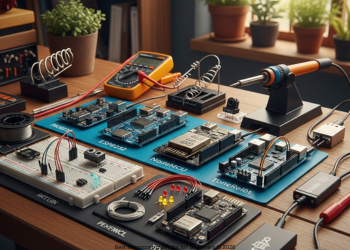
Pick 3: Arduino Nano RP2040 Connect (Best Mix)
Crave Arduino trust with fresh power? Nano RP2040 Connect Blends it.
Shares Pico’s RP2040 chip. Adds ESP32 for wireless. Smart pair.
Why Premium Starter:
- Arduino World: IDE, Cloud, tons of libs, years of tips.
- Built-in Sensors: 6-axis motion (accel, gyro). Mic, too. You won’t need extra buys for sound and shake tests.
- Top Build: Official gear. Solid, trusty.
- Full Wireless: ESP32 co-chip brings Wi-Fi, Bluetooth.
Disadvantages:
- More expensive than ESP32 or Pico W. You pay for brand, sensors, polish.
Ideal For: Newcomers paying for quality pack, sensors, full Arduino backup. Best Microcontrollers for IoT Beginners in 2026.
Honorable Mention: The ESP8266
The ESP8266 predates the ESP32. This board first gave people low-cost Wi-Fi that was simple to use. It has less power and fewer pins. No Bluetooth either. Still, it costs next to nothing. A huge community supports it. For basic projects that just need Wi-Fi, it works well. Best Microcontrollers for IoT Beginners in 2026.
Part 3: What Else Do You Need?
The microcontroller acts as the brain. You will need a few more things to get started:
- A Micro-USB cable. Use it to power the board and program it from your computer.
- A breadboard. Construct circuits on it without soldering.
- Jumper wires. These connect components on the breadboard.
- Get a starter kit as well. It comes with LEDs, resistors, buttons, and some sensors.
Conclusion: Start Building Now!
IoT might look scary at first. But for the newbies, it’s the best time ever. The Hardware costs little, it is strong, and easy to get; communities welcome you with tons of tips. The ESP32 suits most needs. Think of it as IoT’s multi-tool. The Raspberry Pi Pico W or Arduino Nano RP2040 Connect work great too. Pick them if you like their style or ease. Skip overthinking. Buy a board. Get a starter kit. Watch a YouTube tutorial on blinking an LED. Take that first step. The top microcontroller is the one that lets you create. Best Microcontrollers for IoT Beginners in 2026.
FAQs
What is a microcontroller? Why use one for IoT?
A microcontroller is an ultra-small computer chip. It runs your project. For IoT, pick one with internet access: most use Wi-Fi to share data. Best Microcontrollers for IoT Beginners in 2026.
Complete novice here. Which board should I get?
Go with the ESP32; it costs little but also contains power. Wi-Fi and Bluetooth are inbuilt. Best part: endless tutorials and projects online. Best Microcontrollers for IoT Beginners in 2026.
How does ESP32 differ from Raspberry Pi Pico W?
ESP32: Wi-Fi plus Bluetooth. The top pick for IoT fans.
Raspberry Pi Pico W: Wi-Fi only. Excellent documentation. Program it as you would like (MicroPython).
What about Arduino for IoT?
Yes, for this try the Arduino Nano RP2040 Connect; it contains a powerful chip, adds Wi-Fi and Bluetooth, and contains built-in sensors. It’s more expensive than ESP32 or Pico W.
Do I need coding skills?
Yes. But it’s easy for starters. Program with Arduino IDE: Easy C++ style. Tons of examples. MicroPython: Python for microcontrollers. Easy to read and write code. Best Microcontrollers for IoT Beginners in 2026.
What else to buy with the board?
Add these: Micro-USB cable for power and code upload. Breadboard and jumper wires for no-solder circuits. Starter kit containing LEDs, buttons, sensors.
Must I solder?
No. Using a breadboard and jumper wires allows the beginner to connect quickly. Test and change setups using no permanent links. Best Microcontrollers for IoT Beginners in 2026.
1 thought on “Best Microcontrollers for IoT Beginners in 2026”